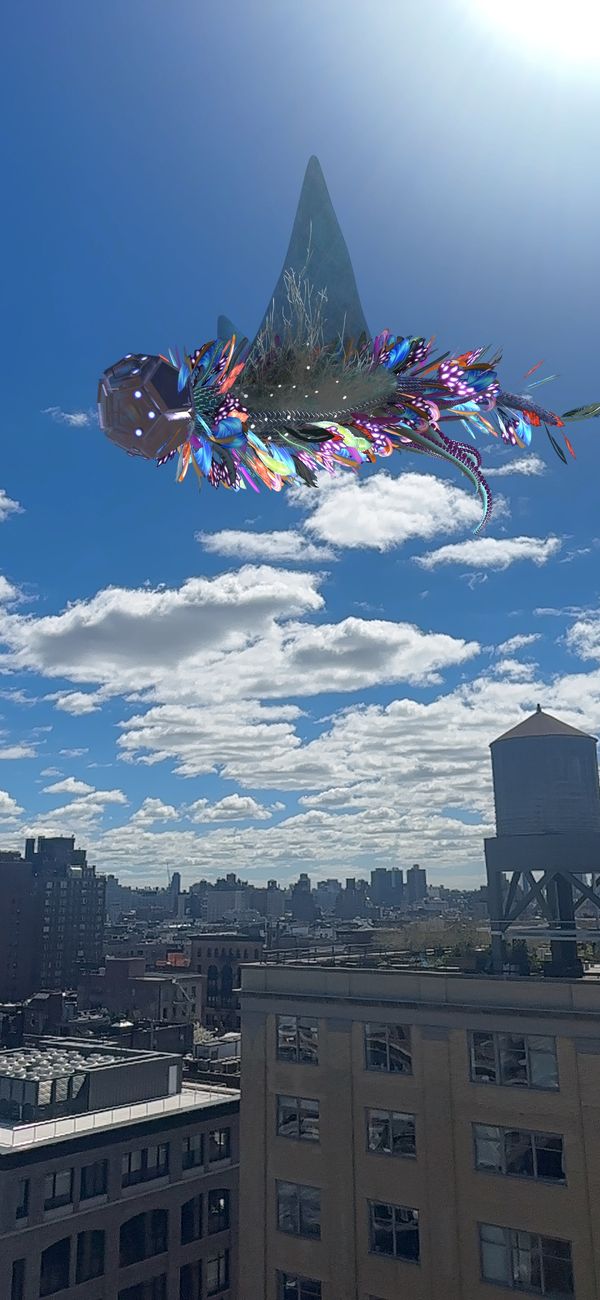
The exhibition Thinking Through Weibel gathered key works out of the Peter Weibel Archive, held by the Collection and Archive at the University of Applied Arts and positioned them in relation to contemporary practices by invited international artists, that unfold through distinct conceptual and material approaches. Their contributions do not follow or extend Peter Weibel’s logic, but move across and against it, forming intersections without fixing relationships.
The exhibition highlights the entwined currents of politics, sexuality, and playfulness that animate Weibel’s experiments. Performative actions, text works, and spatial propositions from Weibel’s early practice appear alongside the works of the participating artists.
Artists:
Morehshin Allahyari, Nancy Baker Cahill, Lynn Hershman Leeson, Jakob Lena Knebl, Rafael Lozano-Hemmer, Thania Petersen, Eva Schlegel, and Peter Weibel
Curated by Valerie Messini and Brooklyn J. Pakathi
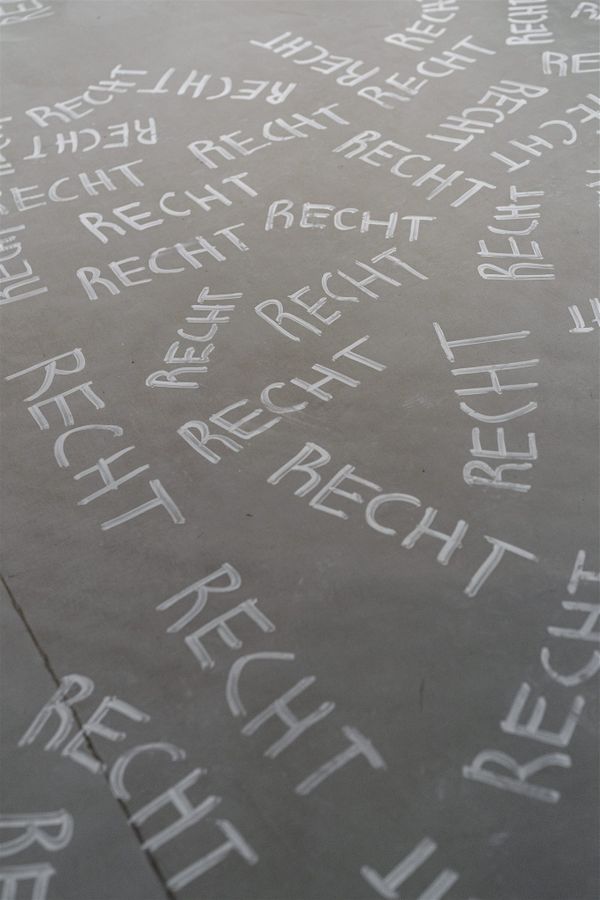
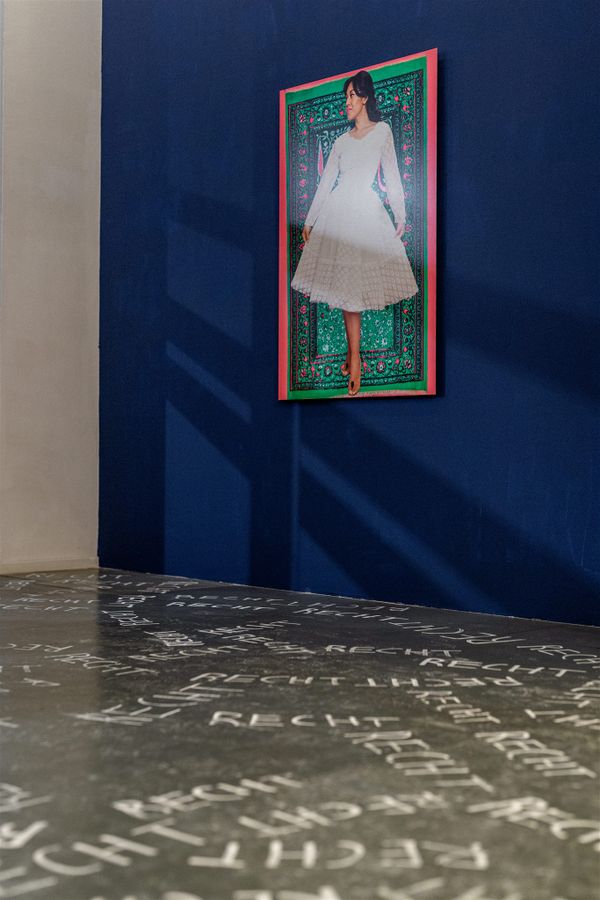
Presented in the two exhibition spaces of AIL, each space followed distinct conceptual approaches while maintaining continuous exchange: the left space was put under the headline “RECHT” and the right space under the keyword “LEFT”. Both words were written in large letters on the floor. The division is both architectural and methodological, allowing each section to develop its own internal logic while remaining in dialogue with the other. RECHT studied devices, technical mediation, and the material life of text as they shape perception and legibility. LEFT pursued questions of desire, play, embodiment, territory, and the body’s entanglement with political and affective structures.
 Das Recht mit Füßen treten, Peter Weibel, 1968
Visitors cross the word Recht printed across the floor, a restaging of Weibel’s Das Recht mit Füßen treten from the late 1960s. The German idiom “trampling the law underfoot” transforms into a performed action. The work draws on concrete poetry’s treatment of text that requires physical traversal, making linguistic signs into obstacles or surfaces that demand bodily engagement rather than a contemplative distance. In Mediendichtung, Weibel writes that viewers become performers because their movement activates the expression written beneath them, turning reading into a choreographed act that precedes interpretation. Each crossing of Recht gives force to the phrase through pace, shuffle, and density. The room functions as an active syntax where motion generates sense.
 Installation view, space ‘RECHT'
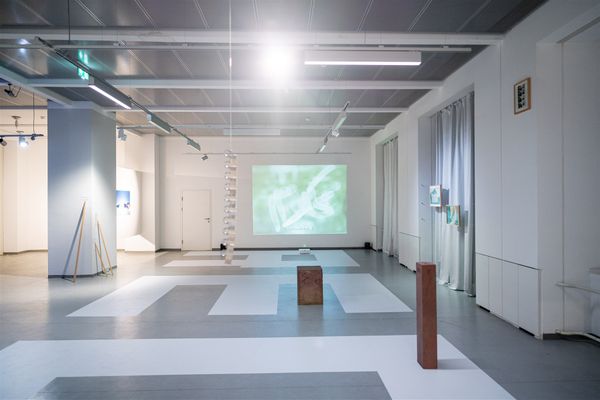
Installation view, space ‘RECHT' The space "RECHT" brings together works that examine language in relation to law, optical mediation in relation to seeing, and how meaning travels through glass, stone, celluloid, metal, cameras, projections, and printed matter. Weibel’s earlier works and experiments establish the ground. The contributions by Morehshin Allahyari, Lynn Hershman Leeson, Rafael Lozano- Hemmer, and Eva Schlegel extend these concerns into feminist critique of imaging technologies, geopolitical archival systems, modular relational structures, and the material conditions of legibility.
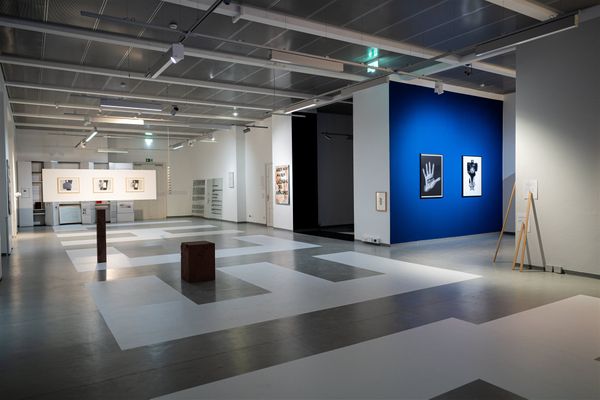
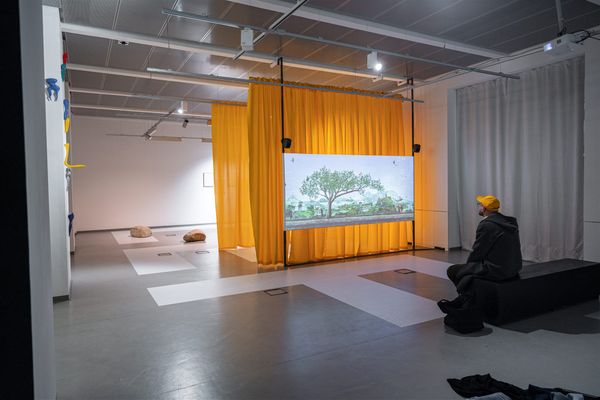
Installation view, space ‘LEFT'. Here the work: Portrait of Childhood, Thania Petersen, 2015 The space "LEFT" asks how bodies carry desire, how play becomes a method of making and how territory is written through gesture, costume, sound, and display. Beginnings intertwine with pleasure and intimacy, Diversions bend them, and Elsewheres that appear once practice has travelled through contact and return. A first image sets the coordinates at the entrance, a moving field of colour and poise that comes with a hidden tension.
A first Beginning transformed from an Elsewhere takes place before entry, where Thania Petersen’s Portrait of a Childhood from her Barbie & Me series stands as a clear proposition. A single figure in white meets saturated pinks and greens that call the eye. The image holds composure and contradiction in equal measure. Prayer, glamour, inheritance, and consumption all appear inside one surface, which turns beauty into a diagnostic reading, a calibration of forces. The photograph names how values and objects shape longing from an early age and how that early training persists. It also sets LEFT’s itinerary. Desire becomes the question that guides attention through the exhibition space and keeps returning at different scales. Thania’s moving image work JAWAP broadens the register of that first gesture. Sound carries memory into the present and sends the present forward. Devotional rhythms pass through bodies and bind distant shores, as a live archive with its own momentum. Colour and choreography deliver scholarship through delight and patience. A viewer hears how language, faith, and kinship move across time and water when sound leads the way. That movement belongs to LEFT’s core proposition. Territory forms through practice, and practice lives in bodies.
Jakob Lena Knebl enters through a different door and keeps the line of desire alive. A body painted in luminous palettes takes on the language of display as its second skin. Memphis geometries, furniture gloss, and sculptural props turn design history into a wardrobe and a stage. Plinths, shelves, cables, cones, stripes, and spheres reappear as companions and foils to a body that plays with codes of taste and identity. The gaze does not float free here. The gaze learns where to sit. The image teaches the viewer how to look, and the performer teaches the image how to speak. This exchange keeps the question of capture devices within LEFT while carrying it into a queer theatre of self-fashioning. The work speaks to desire with humour and exactness. It also joins Thania’s inquiry by showing how training, costume, and surface guide the relation between inside and outside.
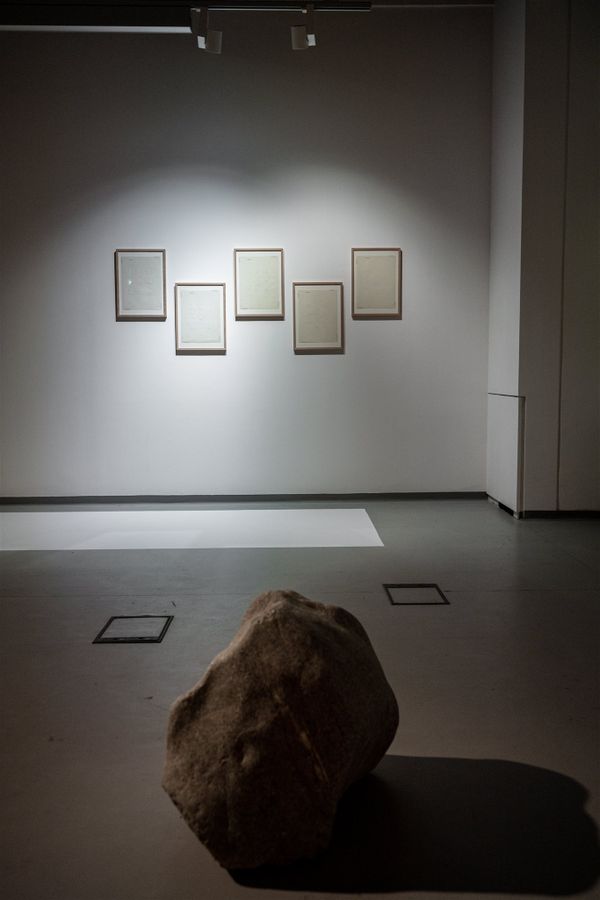
Peter Weibel then shifts the ground from theatre to system without losing the thread of embodiment. Stöhnender Stein (Nicht-humanes Gedicht) routes voice through stone so that matter carries a human sound and keeps breathing when the body steps away. A different work moves from voice to attachment. Parasitäre Skulptur clings to walls and edges and names relation as a condition for life. Forms travel across architecture and announce their presence through colour and placement. The organism, the signal, and the ornament share a single vocabulary.
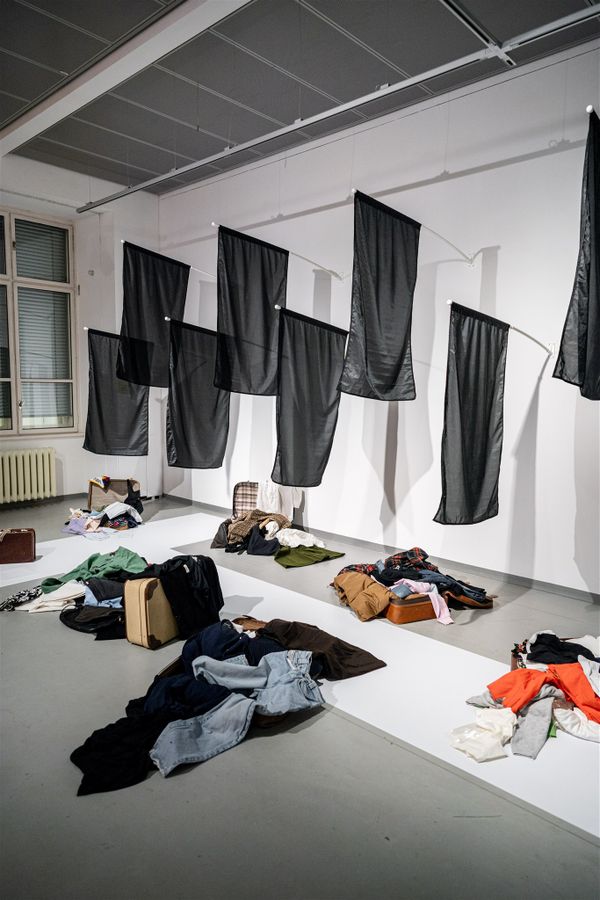
A third work closes the arc of LEFT with a heavy gravity. Festung Europa plants black flags and open cases in the room and lets absence do the speaking. Borders and belongings appear through what has been left behind. These pieces expand the section’s concern with desire, play, and territory by spelling out how bodies and structures meet: through voice passing into objects, through attachment as survival, and through luggage as a measure of movement and loss.
Installation view, space ‘LEFT'. Here the work: JAWAP Thania Petersen, 2025 Installation view, space ‘LEFT'. Here the work: Festung Europa, Peter Weibel, 1994 Installation view, space ‘LEFT'. Here the work: stöhnender stein. nicht-humanes gedicht, Peter Weibel, 1969 / Paper Poems, Peter Weibel, 1965 Thinking Through Weibel emerges as both encounter and departure. It is, at once, an effort to dwell within the experimental urgencies that animated Weibel’s creative and intellectual life, and a movement beyond those urgencies toward possibilities he could not, and perhaps would not, fully account for. The exhibition offers an engagement with Weibel’s practices – his modes of making, his orientations toward materiality, medium, technology and form – as a way of apprehending the contours of his self-making. Yet, it simultaneously demands a thinking through the structures that conditioned his interventions: to traverse the Western epistemological frames that shaped his project and to imagine alongside traditions, practices, and intellectual itineraries that move otherwise. In doing so, it invites an inquiry not into a closed legacy, but into the open-endedness of artistic thought across and against imposed boundaries.
The Weibel Institute for Digital Cultures
is a space for intervention, investigation, and experimentation within the expansive disciplines of arts, science, and technologies. Based at the University of Applied Arts Vienna, the institute critically engages digital and algorithmic cultures. Building on the rich heritage of Viennese investigations into cybernetics, net cultures, media art, and tactical media, the institute serves as a vital node within a global network of research institutions on digital cultures.
The Weibel Institute strives to challenge the underlying logics of digital cultures, unraveling the intricacies of cybernetic control systems and machine learning processes, the dynamics of online communities, the vast landscape of media-technological infrastructures, and their continued entanglements. This endeavor is guided by a commitment to remaking research itself, taking into account reflexive methodologies and seeking collective expressions. Taking on social and ecological responsibility in the face of emerging data systems, the institute questions the extractivist origins of digital landscapes and explores potential technological approaches beyond today’s data positivism. The Weibel Institute invites researchers, students, artists, and activists to join a space for reflection, discussion, and collaboration. Offering access to resources such as the Peter Weibel Archive and an extensive library, the institute fosters theoretical and artistic explorations that probe deeper into the cultures that make up our digital spaces. This public program includes lectures, symposia, exhibitions, workshops, and other activities.
Peter Weibel
(5 March 1944, Odessa – 1 March 2023, Karlsruhe) was an Austrian artist, curator, and art- and media theorist. He is perhaps best known internationally for serving as director of the ZKM (Zentrum für Kunst und Medien in Karlsruhe), which he led from 1999 to 2023, transforming it into a globally influential laboratory linking art, science, and society and staging landmark projects. In this position he started to reframe debates on images, democracy, data, and ecology.
In 2017, following his donation of a substantial part of his archive to the University of Applied Arts Vienna, the Weibel Institute for Digital Cultures was established with Weibel as founding director.
Even while mostly based elsewhere, Weibel remained a distinctly Viennese figure – woven into the city’s culture and memory. From the 1960s, Weibel’s ties to Vienna run through study, debate, teaching, and institution-building, culminating in his resting place: in 1964 he studied at the University of Vienna (initially medicine, then mathematics with a focus on logic); in 1968 he participated in the famous action ‘Kunst und Revolution’ at the University of Vienna; from 1976 he taught at several institutions including the University of Applied Arts Vienna, where he was appointed Professor für Visuelle Mediengestaltung in 1984. Between 1968 and 2014 he showed his work in various (twelve) exhibitions, founded the Hotel Morphila Orchestra and was appointed the curator for the Austrian Pavillon at the Venice Bienniale for several years (1993,1995,1997,1999). Part of his work is preserved in the Weibel-Archiv at the Kunstsammlung und Archivat the University of Applied Arts in Vienna. The state of Austria paid tribute to him by dedicating an honorary grave at the Wiener Zentralfriedhof.