Opening Hours Exhibition:
Opening Mon: 19:00
Tue, Wed: 9:00–18:00
Thu: 9:00–20:00
Fri: 13:00–15:00
Public Colloquium:
Tue–Thu: 9:00–16:30
‘Perhaps, even today, we do not deal with art. We might have overlooked the moment when it transformed itself into something else, something which we cannot yet name. It is certain, however, that what we deal with offers greater possibilities.’ — Jerzy Ludwinski
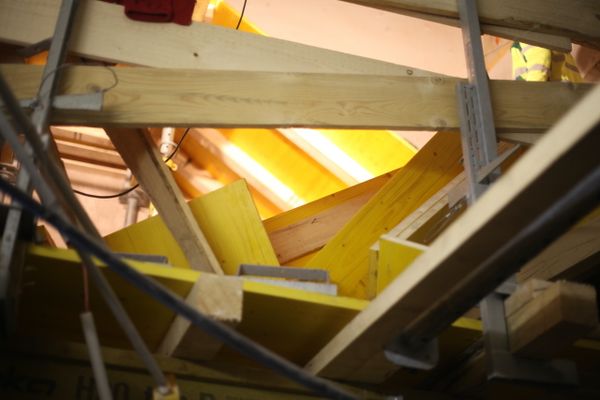
 Photo: Anderwald + Grond (2018)
What does it mean to conduct artistic research today?
This exposition of artistic-research work is an invitation to reflect on the present through the prism of current artistic research. Situated in-between provocation and reflection, the exhibition and the series of public lecture-performances and lectures give insight into the diversity of topics, methods, perspectives, and discursive and display strategies afforded by artistic research. Artist-researchers make speculative propositions about the kinds of knowledge, action, and impact art might yield. The PhD in Art program understands modes of artistic-scientific working as an empowerment of the artists, a critical possibility to reach beyond perceived boundaries, to a mode and attitude of working which fuses and confounds, cross-pollinating the ecologies of the artistic and curatorial with scientific, practice-based and societal impact. Creativity and imagination are essential capacities shaping the present and enabling future-making. This reinvigoration of research-impacted artistic practices has situated artists as agents in social, scientific, and political spheres. The diverse practices of artist-researchers may address pressing artistic, social, political, and ecological issues. Employing creative methods that draw from artistic traditions as well as from research practices, artistic research reaches beyond the limitations of representing or elaborating the world, proposing different outlooks on the present and future.
What are the limitations and hazards of such intermingling, and what becomes generative and fecund in these contact zones? To discuss these questions together with the artist-researchers, this four-day event extends an invitation to be present and join the PhD in Art program in discussing the exhibition and presentations of the current state of the PhD in Art projects.
Reflecting on the candidates’ artistic work together with the audience, on the practices, modes and methods of research and critical analysis, four renowned international guest critics are present:
Sebastian Chichocki, chief curator and head of the research department at MOMA Warsaw and The Consortium for Postartistic Practices
Davide Deriu, architectural theorist and historian at the University of Westminster London
Yael Eylat van Essen, curator and researcher at Holon Institute of Technology
Astrid S. Klein, artist-researcher and lecturer at University of Applied Sciences Düsseldorf and Quartier Flottant, will contribute from their perspective and give insight into their own work in the field.
Participants:
Tamara Antonijević, Niels Bonde, Nisrine Boukhari, Erik Bünger, Margit Busch, Andrew Champlin, Cristiana de Marchi, George Demir, Rah Eleh, Jošt Franko, Oscar Gardea, Joseph Leung, Judit Navratil, Ana Rajčević, Marthin Rozo, Juli Sikorska, Conny Zenk
Program Overview:
Opening: 22 May, 19:00
Exhibition: 23 May–26 May
Public Colloquium: 23 May–25 May
Further Events and Program at ZFF: 23 May–26 May
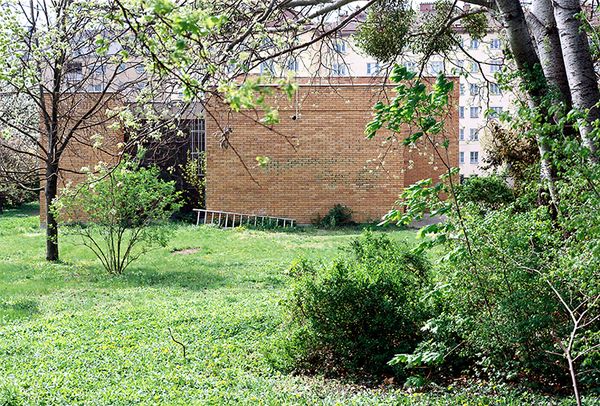
 Zentrum Fokus Forschung at Rustenschacher Allee Vienna. Photo: Katarina Šoškić (2019)
The function of the Zentrum Fokus Forschung is to develop projects in the post-graduate research areas of art and science (research projects, incl. projects evolving from the Artistic Research PhD Programme) and to support significant developments in art and science in general.
The Zentrum Fokus Forschung is a unit – complementing existing departments – at the University of Applied Arts Vienna, in which independent artistic research is generated and connected; artistic work is thereby regarded as the basis of knowledge production, of course in a productive relationship with existing ways of knowledge development, which have been established in other fields of research.
The aim is to generate fresh knowledge regarding specific issues in the arts by providing an adequate institutional focus, to contextualize artistic research and to adequately communicate results in both national and international artistic environments.
Zentrum Fokus Forschung is located at Rustenschacher Allee in Vienna and its core task is to coordinate and develop research activities. As a matter of principle, research in the sense of comprehensive knowledge production is open to any outcome, everything is possible.