topic

Exhibition Activations

Reverse Imagining Vienna. Anthropogenic Mass and Its Speculative Futures

Extended exhibition program, 30 Apr–29 May 2024

TOPIC CONTENT:

The exhibition Reverse Imagining Vienna is the final presentation of the artistic research project of the same name. Sculptures, scientific analyses of the nine anthropogenic materials and the first volume of a publication containing the resulting literary contributions are on display. Four readings by the participating authors will take place as part of the exhibition.

Download the publication here

Since 2020, the global stock of man-made mass has exceeded the total sum of biomass on Earth – around 90 percent of which is building materials. In the project Reverse Imagining Vienna, two sculptors and nine writers took a Viennese Gründerzeit building and the Prater Bridge, which crosses over the Danube, as material and speculative anchors in which to gain perspectives on sustainable relationships with inanimate matter. Referring to so-called reverse engineering, the two structures were deconstructed and recomposed in a historical, material-analytical, poetic and visionary way using reverse imagining.

Over a two year period, the project brought together national and international experts from the disciplines of geology, physics, ecology, urban morphology, transport sciences, evolutionary biology, literature and sculpture. The nine anthropogenic materials most relevant to the case studies were identified and analyzed in terms of cultural history, environmental science and social metabolism, from extraction to recycling management and emissions. Samples of material allowed conclusions to be drawn about their respective origins; the geological formation and potential futures were discussed in lectures by the participating scientists and contextualized for further speculative processing. In this way, images of varied futures were created with a time horizon that extends from the present and spans into the geological distance.

Writers:

Ann Cotten, Elias Hirschl, Jakob Pretterhofer, Julia Grillmayr, Fiston Mwanza Mujila, Neslihan Yakut, Nika Pfeifer, Veronika Franz & Severin Fiala

Scientists:

Angelika Psenner, Barbara Laa, Filipa L. Sousa, Fridolin Krausmann, Jan Zalasiewicz, Johannes Weber, Josepha Edbauer, Michael Wagreich, Peter Fichtinger, Sebastian Hafner, Tanja Traxler, Tess Posch

Project management and sculpure:

Christoph Weber, Nikolaus Eckhard

research presentation

08 May 2024, 18:30

Reverse Imagining Vienna – Reading Night I

Anthropogenic Mass and Its Speculative Futures

with Jakob Pretterhofer, Fiston Mwanza Mujila

All Reading Dates (starting 18:30):

8 May with Jakob Pretterhofer, Fiston Mwanza Mujila

with performance by Nikolaus Eckhard and friends afterwards

15 May with Julia Grillmayr, Nika Pfeifer

22 May with Neslihan Yakut, Ann Cotten

29 May with Veronika Franz, Severin Fiala, Elias Hirschl

Download the publication here

A limited number of printed copies will be available for free during the reading nights.

Image by ©Photo: Mark Gerstorfer

Jakob Pretterhofer was born in Graz in 1985 and studied Screenwriting at the Vienna Film Academy. Since 2023 he is teaching at the Vienna Film Academy. He writes novels and screenplays and often works as a film script advisor.

His latest book is called "Die erste Attacke" (The First Attack), published by Elster & Salis Wien, which tells a story about fear, nightmares and a vacation in the mountains.

Since the Reverse Imagining Vienna project, he has been fascinated by asphalt and concrete, intelligent mushrooms and Café 19 in Favoritenstraße.

Image by ©Photo: Jürgen Fuchs

Fiston Mwanza Mujila (* 1981 in Lubumbashi, DR Congo): From 2007, study visits to Belgium and France. In 2009 he received a scholarship as a city fellow in Graz, where he has lived since then (with interruptions, including for research). He is currently responsible for the literature program at the Forum Stadtpark. In addition to his work as an author and performer (collaboration with jazz musicians), he is active as a mediator and editor of the literature of the African diaspora. Fiston Mwanza Mujila publishes primarily in French, his debut novel Tram 83 received several awards, including the Grand Prix of Literary Associations (2015), the International Literature Prize – by the HKW Berlin and the Peter Rosegger Literature Prize of the State of Styria (2018). The author received the Prix Les Afriques in 2021 for his second novel La danse du Vilain (Dance of the Devils). Fiston Mwanza Mujila is awarded the Fiston Mwanza Mujila * 1981 in Lubumbashi (DR Congo). From 2007, study visits to Belgium and France In 2009 he received a scholarship as a city clerk in Graz, where he has lived since then (with interruptions, including for research). He is currently responsible for the literature program at the Graz Forum Stadtpark. In addition to his work as an author and performer (collaboration with jazz musicians), he is active as a mediator and editor of the literature of the African diaspora. Novels: Fiston Mwanza Mujila publishes primarily in French, his debut novel Tram 83 received several awards, including the Grand Prix of Literary Associations (2015), the International Literature Prize - House of World Cultures and the Peter Rosegger Literature Prize of the State of Styria ( 2018). The author received the Prix Les Afriques in 2021 for his second novel La danse du Vilain (Dance of the Devils). Fiston Mwanza Mujila is awarded the ‘Preis der Literaturhäuser’ in 2024.

About the exhibition:

Since 2020, the global stock of man-made mass has exceeded the total sum of biomass on Earth – around 90 percent of which is building materials. In the project Reverse Imagining Vienna, two sculptors and nine writers took a Viennese Gründerzeit building and the Prater Bridge, which crosses over the Danube, as material and speculative anchors in which to gain perspectives on sustainable relationships with inanimate matter. Referring to so-called reverse engineering, the two structures were deconstructed and recomposed in a historical, material-analytical, poetic and visionary way using reverse imagining.

Over a two year period, the project brought together national and international experts from the disciplines of geology, physics, ecology, urban morphology, transport sciences, evolutionary biology, literature and sculpture. The nine anthropogenic materials most relevant to the case studies were identified and analyzed in terms of cultural history, environmental science and social metabolism, from extraction to recycling management and emissions. Samples of material allowed conclusions to be drawn about their respective origins; the geological formation and potential futures were discussed in lectures by the participating scientists and contextualized for further speculative processing. In this way, images of varied futures were created with a time horizon that extends from the present and spans into the geological distance.

The exhibition Reverse Imagining Vienna is the final presentation of the artistic research project of the same name. Sculptures, scientific analyses of the nine anthropogenic materials and the first volume of a publication containing the resulting literary contributions are on display. Four readings by the participating authors will take place as part of the exhibition.

Image by ©

Writers:

Ann Cotten, Elias Hirschl, Jakob Pretterhofer, Julia Grillmayr, Fiston Mwanza Mujila, Neslihan Yakut, Nika Pfeifer, Veronika Franz & Severin Fiala

Scientists:

Angelika Psenner, Barbara Laa, Filipa L. Sousa, Fridolin Krausmann, Jan Zalasiewicz, Johannes Weber, Josepha Edbauer, Michael Wagreich, Peter Fichtinger, Sebastian Hafner, Tanja Traxler, Tess Posch

Project management and sculpure:
Christoph Weber, Nikolaus Eckhard
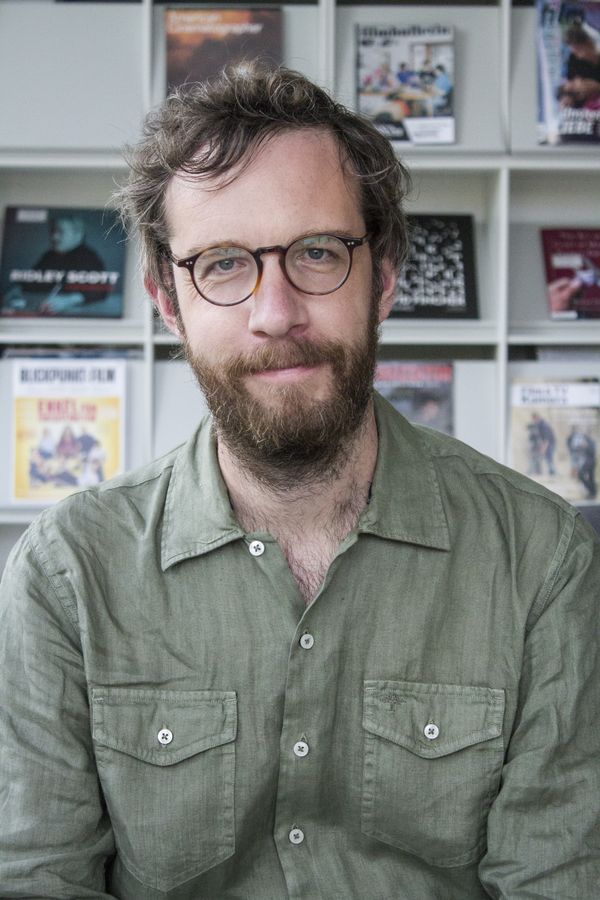
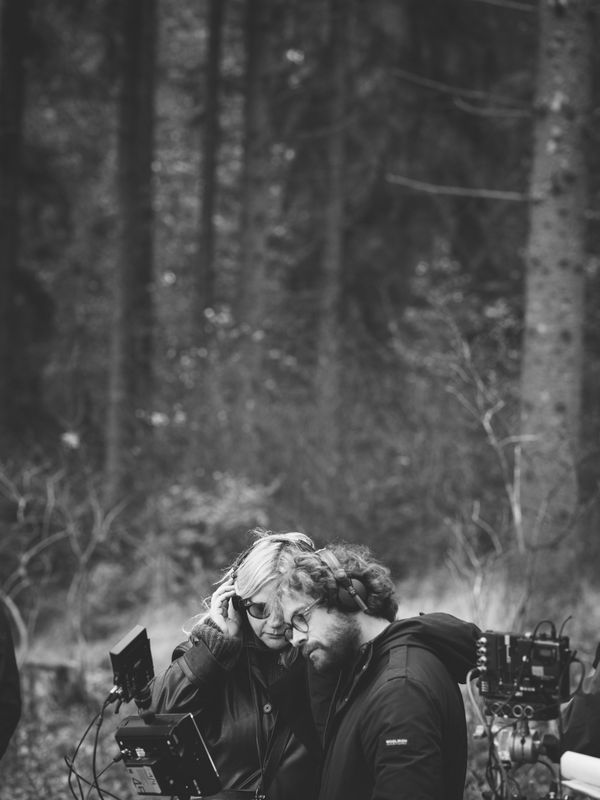
Image: Christoph Weber

research presentation

15 May 2024, 18:30

Reverse Imagining Vienna – Reading Night II

Anthropogenic Mass and Its Speculative Futures

with Julia Grillmayr, Nika Pfeifer

All Reading Dates (starting 18:30):

8 May with Jakob Pretterhofer, Fiston Mwanza Mujila

with performance by Nikolaus Eckhard and friends afterwards

15 May with Julia Grillmayr, Nika Pfeifer

22 May with Neslihan Yakut, Ann Cotten

29 May with Veronika Franz, Severin Fiala, Elias Hirschl

Download the publication here

A limited number of printed copies will be available for free during the reading nights.

Image by ©Photo: Leon Höllhumer

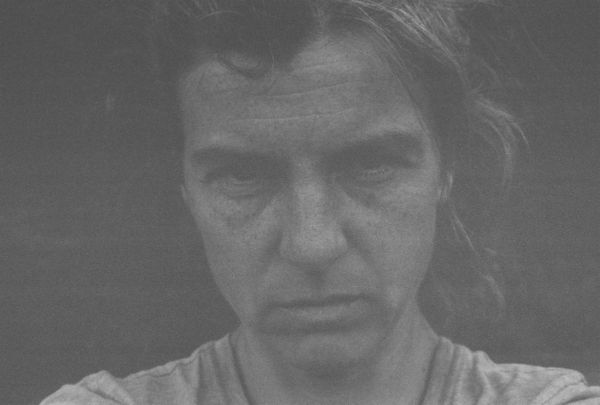
Julia Grillmayr (*1987) is a visiting professor of cultural studies at the Art University Linz, Austria. Her key research areas are science fiction cultures and environmental humanities. She holds a PhD in Comparative Literature from the University of Vienna and currently writes a book with the working title “Science Fiction Futurologies”. Together with Christina Gruber and Sophia Rut she forms the artistic research collective “Lobau Listening Comprehensions” and, in this context, has been awarded the Theodor Körner Preis 2023. She has worked as a print and radio journalist for, among others, Augustin, Der Standard and Ö1, and initiated the radio broadcast “Superscience Me” on Radio Orange. The rest of the time, she spends in muddy danubian wetlands and in tap shoes.

Image by ©Photo: Alain Barbero

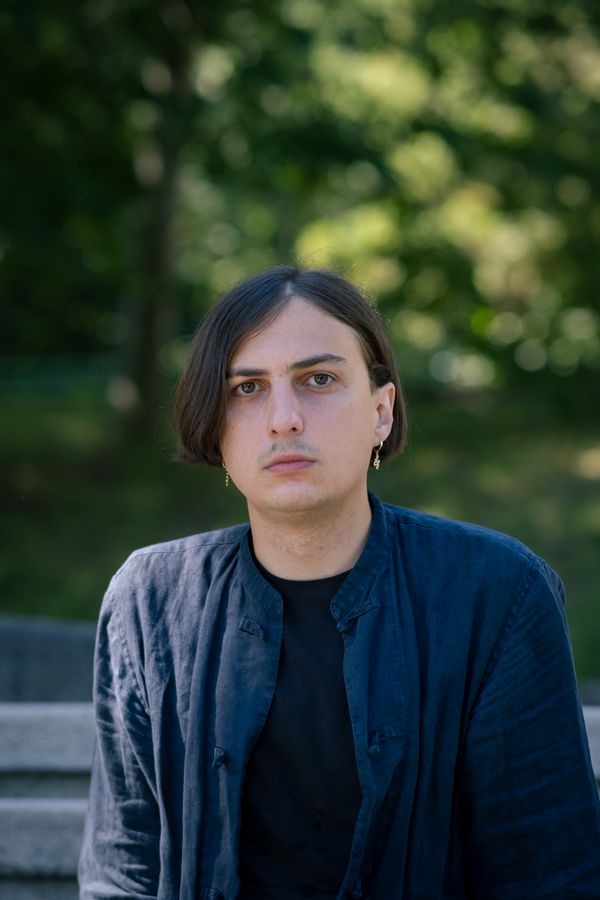
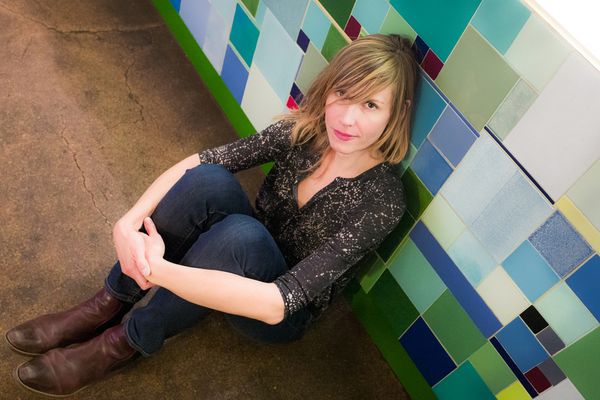
Nika Pfeifer’s artistic use of language be it in her poems, prose, sound, and video works is subversive, playful, and multi-layered, creating tangible experiences. She explores contradictions, bringing together seemingly incompatible elements, highlighting them as necessary and meaningful. She engages in participatory projects reflecting current discourses and social norms in a humorous and sensual way. Publications: TUCSONICS, hochroth 2022; Violante, Czernin 2017; tracksensuel. edition ė 2016.

About the exhibition:

Since 2020, the global stock of man-made mass has exceeded the total sum of biomass on Earth – around 90 percent of which is building materials. In the project Reverse Imagining Vienna, two sculptors and nine writers took a Viennese Gründerzeit building and the Prater Bridge, which crosses over the Danube, as material and speculative anchors in which to gain perspectives on sustainable relationships with inanimate matter. Referring to so-called reverse engineering, the two structures were deconstructed and recomposed in a historical, material-analytical, poetic and visionary way using reverse imagining.

Over a two year period, the project brought together national and international experts from the disciplines of geology, physics, ecology, urban morphology, transport sciences, evolutionary biology, literature and sculpture. The nine anthropogenic materials most relevant to the case studies were identified and analyzed in terms of cultural history, environmental science and social metabolism, from extraction to recycling management and emissions. Samples of material allowed conclusions to be drawn about their respective origins; the geological formation and potential futures were discussed in lectures by the participating scientists and contextualized for further speculative processing. In this way, images of varied futures were created with a time horizon that extends from the present and spans into the geological distance.

The exhibition Reverse Imagining Vienna is the final presentation of the artistic research project of the same name. Sculptures, scientific analyses of the nine anthropogenic materials and the first volume of a publication containing the resulting literary contributions are on display. Four readings by the participating authors will take place as part of the exhibition.

Image by ©

Writers:

Ann Cotten, Elias Hirschl, Jakob Pretterhofer, Julia Grillmayr, Fiston Mwanza Mujila, Neslihan Yakut, Nika Pfeifer, Veronika Franz & Severin Fiala

Scientists:

Angelika Psenner, Barbara Laa, Filipa L. Sousa, Fridolin Krausmann, Jan Zalasiewicz, Johannes Weber, Josepha Edbauer, Michael Wagreich, Peter Fichtinger, Sebastian Hafner, Tanja Traxler, Tess Posch

Project management and sculpure:
Christoph Weber, Nikolaus Eckhard
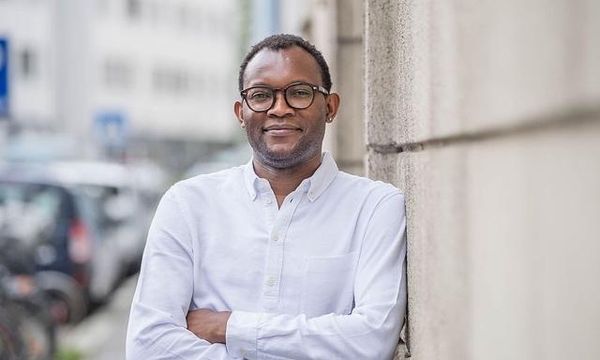
Image: Christoph Weber

research presentation

22 May 2024, 18:30

Reverse Imagining Vienna – Reading Night III

Anthropogenic Mass and Its Speculative Futures

with Neslihan Yakut, Ann Cotten

All Reading Dates (starting 18:30):

8 May with Jakob Pretterhofer, Fiston Mwanza Mujila

with performance by Nikolaus Eckhard and friends afterwards

15 May with Julia Grillmayr, Nika Pfeifer

22 May with Neslihan Yakut, Ann Cotten

29 May with Veronika Franz, Severin Fiala, Elias Hirschl

Download the publication here

A limited number of printed copies will be available for free during the reading nights.

Image by ©Photo: Dennis Verfurth

Neslihan Yakut writes, translates and mediates art and culture. She comes from one city (Berlin), now lives in another city (Vienna), but longs for a third city ( ). in 2020 she decided to stop defining herself through cities and failed miserably in 2023. Texts have been published in various media and in different languages. Projects have been realised, events have been organised and works exhibited. She is currently writing a novel. It is about a city.

Image by ©Photo: AC

Ann Cotten (*1982) is a writer and translator from Vienna, Austria, based in Berlin. Recent translations include books by J. Wenderoth, I. Waidner, R. Waldrop, L. Russell, A. Green, articles by K. Sasaki, M. Ishida and M. Shinohara, poetry by Hachikai Mimi, Julian Brolaski, Margaret Atwood. "Rotten Kinck Schow" with M. Rinck and Sabine Scho 2007-2014. Cotten's English language work is published by Broken Dimanche Press (I, Coleoptile, 2013; Lather In Heaven, 2016). Her most recent book in German is "Die Anleitungen der Vorfahren" (edition suhrkamp 2023). Co-editor of Triëdere, Austrian journal for theoretical literature, since 2023. She is currently working on her PhD "Aesthetics of Misuseability" at FU Berlin.

About the exhibition:

Since 2020, the global stock of man-made mass has exceeded the total sum of biomass on Earth – around 90 percent of which is building materials. In the project Reverse Imagining Vienna, two sculptors and nine writers took a Viennese Gründerzeit building and the Prater Bridge, which crosses over the Danube, as material and speculative anchors in which to gain perspectives on sustainable relationships with inanimate matter. Referring to so-called reverse engineering, the two structures were deconstructed and recomposed in a historical, material-analytical, poetic and visionary way using reverse imagining.

Over a two year period, the project brought together national and international experts from the disciplines of geology, physics, ecology, urban morphology, transport sciences, evolutionary biology, literature and sculpture. The nine anthropogenic materials most relevant to the case studies were identified and analyzed in terms of cultural history, environmental science and social metabolism, from extraction to recycling management and emissions. Samples of material allowed conclusions to be drawn about their respective origins; the geological formation and potential futures were discussed in lectures by the participating scientists and contextualized for further speculative processing. In this way, images of varied futures were created with a time horizon that extends from the present and spans into the geological distance.

The exhibition Reverse Imagining Vienna is the final presentation of the artistic research project of the same name. Sculptures, scientific analyses of the nine anthropogenic materials and the first volume of a publication containing the resulting literary contributions are on display. Four readings by the participating authors will take place as part of the exhibition.

Image by ©

Writers:

Ann Cotten, Elias Hirschl, Jakob Pretterhofer, Julia Grillmayr, Fiston Mwanza Mujila, Neslihan Yakut, Nika Pfeifer, Veronika Franz & Severin Fiala

Scientists:

Angelika Psenner, Barbara Laa, Filipa L. Sousa, Fridolin Krausmann, Jan Zalasiewicz, Johannes Weber, Josepha Edbauer, Michael Wagreich, Peter Fichtinger, Sebastian Hafner, Tanja Traxler, Tess Posch

Project management and sculpure:
Christoph Weber, Nikolaus Eckhard

Image: Christoph Weber

research presentation

29 May 2024, 18:30

Reverse Imagining Vienna – Reading Night IIII

Anthropogenic Mass and Its Speculative Futures

with Veronika Franz & Severin Fiala, Elias Hirschl

All Reading Dates (starting 18:30):

8 May with Jakob Pretterhofer, Fiston Mwanza Mujila

with performance by Nikolaus Eckhard and friends afterwards

15 May with Julia Grillmayr, Nika Pfeifer

22 May with Neslihan Yakut, Ann Cotten

29 May with Veronika Franz, Severin Fiala, Elias Hirschl

Download the publication here

A limited number of printed copies will be available for free during the reading nights.

Image by ©Photo: Ingo Pertramer

Veronika Franz, born in Vienna in 1965, studied German Language and Philosophy and worked as a journalist. In addition, she has accompanied Ulrich Seidl's work since 1997 as an artist, employee and wrote scripts with him for all films such as DOG DAYS (2001), or the PARADISE trilogy (2012/13).

Severin Fiala born in Horn in 1985, studied screenwriting at the Vienna Film Academy. The first collaboration between the two was the documentary KERN (premiere: Locarno Film Festival 2012). This was followed by the feature film ICH SEH ICH SEH (2014), which premiered at the Venice Film Festival, won multiple awards and was sent as Austria’s entry for the Oscar. An US remake of the film was released internationally by Amazon in 2022, starring Naomi Watts. THE LODGE (premiere: Sundance 2019), the directing duo's first English-language feature film, features a prominent cast of US stars Riley Keough and Jaeden Martell. Her historical feature film THE TEUFELS BAD followed in 2024, which celebrated its world premiere at the Berlinale 2024 and was awarded a Silver Bear.

Image by ©Photo: Petra Weixelbran / Zsolnay

Elias Hirschl was born in Vienna in 1994. He writes novels, slam poetry, and texts for theater and radio. He is part of the artist collective Das Magische Auge and the Post-Punk-Band Ein Gespenst. In 2021 the novel “Salonfähig” was published and in 2022 he went to Dortmund for a while to research his latest novel “Content” (published by Zsolnay). Hirschl studied mathematics and philosophy more or less successfully, dealing with logic, language and everything in between. Elias Hirschl doesn't own an octopus.

About the exhibition:

Since 2020, the global stock of man-made mass has exceeded the total sum of biomass on Earth – around 90 percent of which is building materials. In the project Reverse Imagining Vienna, two sculptors and nine writers took a Viennese Gründerzeit building and the Prater Bridge, which crosses over the Danube, as material and speculative anchors in which to gain perspectives on sustainable relationships with inanimate matter. Referring to so-called reverse engineering, the two structures were deconstructed and recomposed in a historical, material-analytical, poetic and visionary way using reverse imagining.

Over a two year period, the project brought together national and international experts from the disciplines of geology, physics, ecology, urban morphology, transport sciences, evolutionary biology, literature and sculpture. The nine anthropogenic materials most relevant to the case studies were identified and analyzed in terms of cultural history, environmental science and social metabolism, from extraction to recycling management and emissions. Samples of material allowed conclusions to be drawn about their respective origins; the geological formation and potential futures were discussed in lectures by the participating scientists and contextualized for further speculative processing. In this way, images of varied futures were created with a time horizon that extends from the present and spans into the geological distance.

The exhibition Reverse Imagining Vienna is the final presentation of the artistic research project of the same name. Sculptures, scientific analyses of the nine anthropogenic materials and the first volume of a publication containing the resulting literary contributions are on display. Four readings by the participating authors will take place as part of the exhibition.

Image by ©

Writers:

Ann Cotten, Elias Hirschl, Jakob Pretterhofer, Julia Grillmayr, Fiston Mwanza Mujila, Neslihan Yakut, Nika Pfeifer, Veronika Franz & Severin Fiala

Scientists:

Angelika Psenner, Barbara Laa, Filipa L. Sousa, Fridolin Krausmann, Jan Zalasiewicz, Johannes Weber, Josepha Edbauer, Michael Wagreich, Peter Fichtinger, Sebastian Hafner, Tanja Traxler, Tess Posch

Project management and sculpure:
Christoph Weber, Nikolaus Eckhard
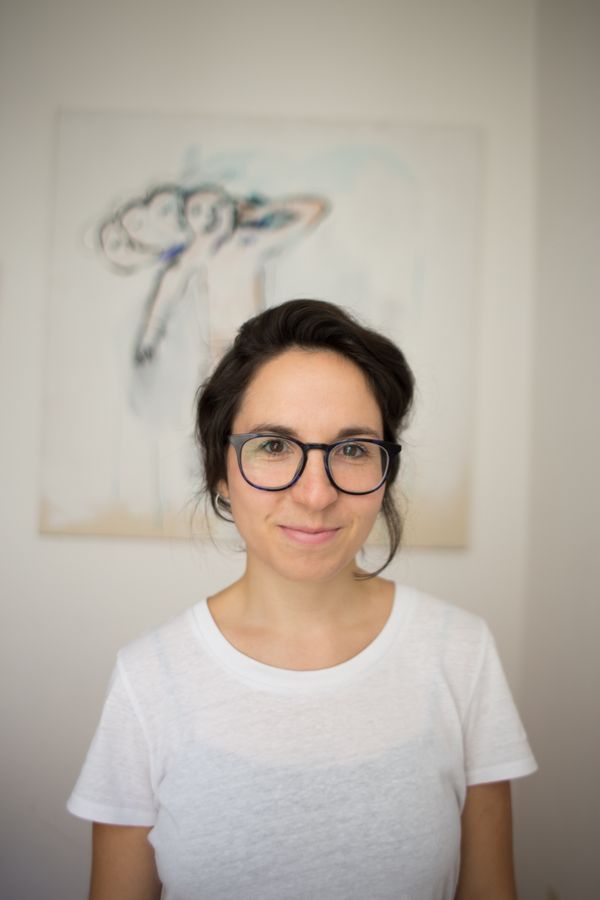
Image: Christoph Weber

news

Klima Biennale 2024

Reverse Imagining Vienna. Anthropogenic Mass and Its Speculative Futures / Energy At the Threshold of the Visible World

Exhibtion Openings 30 Apr, 19:00 and 3 May, 19:00

Image by ©

With the vision and innovative power of art, the Klima Biennale Wien spurs the paradigm shift toward a livable and sustainable future on our planet. The key tools to achieve this objective are, without doubt, participation, collaboration, and awareness. The Biennale will stake out viable responses to the climate crisis together with the people of Vienna. 

The Klima Biennale Wien faces the challenge of making the highly complex and acute issues of global change, the climate crisis, species extinction, and the impacts on the human-nature fabric visible and tangible for everyone: because we urgently need to find new ways of sharing knowledge and discussing strategies together! 

The profound and sweeping changes in the Earth’s system necessitate a duly holistic debate. Therefore, the concept and working method of the Biennale focus on multiperspectivity: we see the future as a shared design task and claim a space for reconciling different and sometimes contradictory positions. Precisely such frictions are fertile ground for transformations in society. 

In its exhibitions, in public spaces or as part of the festival programme, the Klima Biennale Wien brings together current positions from the fields of international contemporary art, design, architecture and science that point the way to socially and ecologically just world relations. Based on the principles of care and sustainability, the Biennale proposes concrete alternatives by questioning turbo-capitalist concepts and overcoming patriarchal and colonial paradigms in favour of collective, inclusive and common-good strategies.

As part of Klima Biennale AIL presents two exhibitions:

Reverse Imagining Vienna. Anthropogenic Mass and Its Speculative Futures

Exhibition Opening: 30 Apr, 19:00

Writers:
Ann Cotten, Elias Hirschl, Jakob Pretterhofer, Julia Grillmayr, Fiston Mwanza Mujila, Neslihan Yakut, Nika Pfeifer, Veronika Franz & Severin Fiala

Scientists:
Angelika Psenner, Barbara Laa, Filipa L. Sousa, Fridolin Krausmann, Jan Zalasiewicz, Johannes Weber, Josepha Edbauer, Michael Wagreich, Peter Fichtinger, Sebastian Hafner, Tanja Traxler, Tess Posch

Project management and sculpure:
Christoph Weber, Nikolaus Eckhard
Reading Nights (starting 18:30)

8 May with Jakob Pretterhofer, Fiston Mwanza Mujila

with performance by Nikolaus Eckhard and friends afterwards

15 May with Julia Grillmayr, Nika Pfeifer

22 May with Neslihan Yakut, Ann Cotten

29 May with Veronika Franz, Severin Fiala, Elias Hirschl

Energy At the Threshold of the Visible World

Exhibition Opening: 3 May, 19:00

With works by Hubert Dobler, Exikon, Barbara Kapusta, Mathias Kessler, Galo Patricio Moncayo Asan and Michael Wang. 

The exhibition was conceptualized and organized by Tülay Atak and Bernhard Sommer with Galo Patricio Moncayo Asan, Malgorzata Sommer-Nawara, Florian Zeif and Daniil Zhiltsov, and with graphic design by Annija Česka

Related event: In conjunction with the exhibition, the symposium building Environments: Architectural Theory beyond a Changing Climate will take place on 3 May at Auditorium, Vordere Zollamtsstr. 7. Find all info here

Opening hours:
Mon–Fri: 11:00–18:00
Extra Saturday: 4 May, 10:00–18:00

image

Exhibition View: Reverse Imagining Vienna

Anthropogenic Mass and Its Speculative Futures

Research Presentation from May 2024

Image by ©
Image by ©
Image by ©
Image by ©
Image by ©
Image by ©
Image by ©
Image by ©
Image by ©
Image by ©
Image by ©

The exhibition Reverse Imagining Vienna is the final presentation of the artistic research project of the same name. Sculptures, scientific analyses of the nine anthropogenic materials and the first volume of a publication containing the resulting literary contributions are on display. Four readings by the participating authors will take place as part of the exhibition.

Download the publication here

Since 2020, the global stock of man-made mass has exceeded the total sum of biomass on Earth – around 90 percent of which is building materials. In the project Reverse Imagining Vienna, two sculptors and nine writers took a Viennese Gründerzeit building and the Prater Bridge, which crosses over the Danube, as material and speculative anchors in which to gain perspectives on sustainable relationships with inanimate matter. Referring to so-called reverse engineering, the two structures were deconstructed and recomposed in a historical, material-analytical, poetic and visionary way using reverse imagining.

Over a two year period, the project brought together national and international experts from the disciplines of geology, physics, ecology, urban morphology, transport sciences, evolutionary biology, literature and sculpture. The nine anthropogenic materials most relevant to the case studies were identified and analyzed in terms of cultural history, environmental science and social metabolism, from extraction to recycling management and emissions. Samples of material allowed conclusions to be drawn about their respective origins; the geological formation and potential futures were discussed in lectures by the participating scientists and contextualized for further speculative processing. In this way, images of varied futures were created with a time horizon that extends from the present and spans into the geological distance.

Writers:

Ann Cotten, Elias Hirschl, Jakob Pretterhofer, Julia Grillmayr, Fiston Mwanza Mujila, Neslihan Yakut, Nika Pfeifer, Veronika Franz & Severin Fiala

Scientists:

Angelika Psenner, Barbara Laa, Filipa L. Sousa, Fridolin Krausmann, Jan Zalasiewicz, Johannes Weber, Josepha Edbauer, Michael Wagreich, Peter Fichtinger, Sebastian Hafner, Tanja Traxler, Tess Posch

Project management and sculpure:

Christoph Weber, Nikolaus Eckhard

This exhibition was part of Klima Biennale 2024

Image by ©Part of the project team. Reverse Imagining Vienna

All images: Lea Dörl

Special thanks to Bundesdenkmalamt – Kartause Mauerbach